B) False
Correct Answer

verified
Correct Answer
verified
B) False
Correct Answer
verified
Correct Answer
verified
A) consumption, investment, durable goods and exports.
B) consumption, gross private domestic investment, government spending for goods and services, and exports.
C) consumption, gross private domestic investment, government spending for goods and services, and net exports.
D) consumption, net private domestic investment, government spending for goods and services, and net exports.
E) consumption, gross private domestic investment, all government spending including transfer payments, and net exports.
G) B) and D)
Correct Answer
verified
Correct Answer
verified
A) wages and salary earnings.
B) personal consumption.
C) net profits of corporations.
D) gross private investment.
F) All of the above
Correct Answer
verified
Correct Answer
verified
A) the market value of all final goods and services produced within the borders of a nation.
B) incomes received by all of a nation's households.
C) the quantity of each good and service produced by U.S. residents.
D) none of these.
F) All of the above
Correct Answer
verified
Correct Answer
verified
A) quantity of each good and service produced by U.S. residents.
B) market value of all final goods and services produced within the borders of a nation.
C) quantity of goods and services produced by companies owned by U.S. citizens.
D) none of these.
F) None of the above
Correct Answer
verified
Correct Answer
verified
B) False
Correct Answer
verified
Correct Answer
verified
A) $1,000 billion.
B) $100 billion.
C) $600 billion.
D) $20 billion.
F) A) and B)
Correct Answer
verified
Correct Answer
verified
B) False
Correct Answer
verified
Correct Answer
verified
A) Money flows from government to households for taxes.
B) Money flows from foreign economies to households for exports.
C) Money flows from government to firms for goods and services.
D) Money flows from firms to foreign economies for exports.
E) Money flows from households to foreign economies for resources.
G) A) and C)
Correct Answer
verified
Correct Answer
verified
A) The expenditure approach.
B) The income approach.
C) The product-market approach.
D) The circular-flow approach.
F) All of the above
Correct Answer
verified
Correct Answer
verified
A) final goods and services.
B) intermediate goods.
C) consumer goods and services.
D) capital goods.
F) A) and C)
Correct Answer
verified
Correct Answer
verified
A) land.
B) labor.
C) capital.
D) final goods.
F) A) and B)
Correct Answer
verified
Correct Answer
verified
A) $35.
B) - $35.
C) $379.
D) - $379.
F) A) and B)
Correct Answer
verified
Correct Answer
verified
A) opportunity cost approach.
B) income approach.
C) expenditure approach.
D) monetarist approach.
F) B) and D)
Correct Answer
verified
Correct Answer
verified
A) 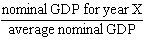
B) 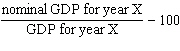
C) 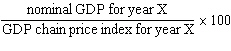
D) 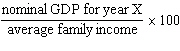
F) A) and B)
Correct Answer
verified
Correct Answer
verified
A) $7,400 billion.
B) $7,250 billion.
C) $8,150 billion.
D) $8,200 billion.
E) $8,350 billion.
G) All of the above
Correct Answer
verified
Correct Answer
verified
A) rises.
B) falls.
C) is unchanged.
D) rises, but the value of GDP falls.
F) B) and D)
Correct Answer
verified
Correct Answer
verified
A) understate the economy's performance.
B) overstate the economy's performance.
C) fluctuate unpredictably.
D) accurately reflect this subterranean activity.
F) None of the above
Correct Answer
verified
Correct Answer
verified
A) the existing prices at which final goods and services are actually sold.
B) prices of final goods and services adjusted for inflation.
C) prices at which intermediate goods are sold.
D) none of these.
F) C) and D)
Correct Answer
verified
Correct Answer
verified
Showing 81 - 100 of 223
Related Exams