A) 1/3
B) 1/4
C) 3
D) 4
F) A) and B)
Correct Answer

verified
Correct Answer
verified
A) A.
B) B.
C) D.
D) E.
F) A) and D)
Correct Answer
verified
Correct Answer
verified
A) $0.50
B) $1
C) $2
D) $4
F) B) and D)
Correct Answer
verified
Correct Answer
verified
Correct Answer
verified
The slope of the bud...View Answer
Correct Answer
verified
View Answer
A) $4
B) $8
C) $12
D) $20
F) A) and D)
Correct Answer
verified
Correct Answer
verified
A) utility from consuming rice is equal to her utility from consuming beams.
B) marginal utility of rice is equal to her marginal utility of beans.
C) marginal utility per dollar spent on rice equals her marginal utility per dollar spent on beans.
D) marginal rate of substitution is equal to 1.
F) A) and B)
Correct Answer
verified
Correct Answer
verified
Correct Answer
verified
Kevin's opportunity ...View Answer
Correct Answer
verified
View Answer
B) False
Correct Answer
verified
Correct Answer
verified
A) fewer normal goods and more inferior goods.
B) more normal goods and fewer inferior goods.
C) more normal goods and more inferior goods.
D) fewer normal goods and fewer inferior goods.
F) None of the above
Correct Answer
verified
Correct Answer
verified
B) False
Correct Answer
verified
Correct Answer
verified
A) normal good.
B) inferior good that is not a Giffen good.
C) Giffen good.
D) luxury good.
F) B) and C)
Correct Answer
verified
Correct Answer
verified
A) $4.50.
B) $3.85.
C) $3.00.
D) $2.80.
F) None of the above
Correct Answer
verified
Correct Answer
verified
Correct Answer
verified
buy more o...View Answer
Correct Answer
verified
View Answer
A) price of apples = $6/pound; price of pears = $4/pound
B) price of apples = $4/pound; price of pears = $6/pound
C) price of apples = $6/pound; price of pears = $5/pound
D) price of apples = $5/pound; price of pears = $6/pound
F) C) and D)
Correct Answer
verified
Correct Answer
verified
B) False
Correct Answer
verified
Correct Answer
verified
Correct Answer
verified
Yes. The point (0, 40000) is the horizon...View Answer
Correct Answer
verified
View Answer
Which of the following represents a consumer's optimum?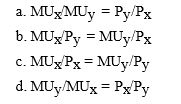
) undefined
Correct Answer
verified
Correct Answer
verified
Correct Answer
verified
the margin...View Answer
Correct Answer
verified
View Answer
A) $3.33
B) $5
C) $15
D) $30
F) C) and D)
Correct Answer
verified
Correct Answer
verified
A) 3
B) 4
C) 5
D) 6
F) All of the above
Correct Answer
verified
Correct Answer
verified
Showing 161 - 180 of 440
Related Exams