Filters
Question type

Study Flashcards

In an endothermic process,heat is absorbed by the system.

A) True
B) False

Correct Answer

verifed

verified

Suppose a new metallic element X is discovered,and its reactions with oxygen gas and chlorine gas at 298 K are studied. Trial Reaction ΔHºrxn (kJ/mol) 1 4X(s) + 3O2(g) → 2X2O3(s) -600 2 2X(s) + 3Cl2(g) → 2XCl3(s) -800 3 4XCl3(s) + 3O2(g) →X2O3(s) +6Cl2(g) -200 However,it is later discovered that one of the samples was contaminated,and the ΔHºrxn value from this trial is not reliable.Which trial had the contaminated sample,and what should the correct value of ΔHºrxn be for this trial?


A) Trial 1 had the contaminated sample; its ΔHºrxn value should be -900 kJ/mol.
B) Trial 2 had the contaminated sample; its ΔHºrxn value should be +100 kJ/mol.
C) Trial 3 had the contaminated sample; its ΔHºrxn value should be -1000 kJ/mol.
D) Trial 3 had the contaminated sample; its ΔHºrxn value should be +1000 kJ/mol.
E) Not enough information is provided; all three trials must be redone.

F) B) and C)
G) A) and D)

Correct Answer

verifed

verified

How much heat is required to raise the temperature of 12.0 g of water from 15.4°C to 93.0°C? The specific heat of water is 4.184 J/g·°C.


A) 223 J
B) 773 J
C) 503 J
D) 4.67 ×10³ J
E) 3.90 ×10³ J

F) A) and D)
G) A) and C)

Correct Answer

verifed

verified

When 0.560 g of Na(s) reacts with excess F2(g) to form NaF(s) ,13.8 kJ of heat is evolved at standard-state conditions.What is the standard enthalpy of formation (ΔH°f) of NaF(s) ?


A) 567 kJ/mol
B) -24.8 kJ/mol
C) -7.8 kJ/mol
D) 24.8 kJ/mol
E) -567 kJ/mol

F) A) and B)
G) A) and C)

Correct Answer

verifed

verified

Benzene is a starting material in the synthesis of nylon fibers and polystyrene (styrofoam) .Its specific heat capacity is 1.74 J/g·°C.If 16.7 kJ of energy is absorbed by a 225-g sample of benzene at 20.0°C,what is its final temperature?


A) -22.7°C
B) 37.7°C
C) 42.7°C
D) 62.7°C
E) 80.1°C

F) D) and E)
G) None of the above

Correct Answer

verifed

verified

Calculate the standard enthalpy change for the reaction 2C8H18(l) + 21O2(g) → 8CO(g) + 8CO2(g) + 18H2O(l) .Given: 2C8H18(l) + 25O2(g) → 16CO2(g) + 18H2O(l) ΔH° = -11,020.kJ/mol 2CO(g) + O2(g) → 2CO2(g) ΔH° = -566.0 kJ/mol


A) 1.0454 × 10⁴ kJ/mol
B) -8756 kJ/mol
C) 1.1586 × 10⁴ kJ/mol
D) -6492 kJ/mol
E) -1.0454 × 10⁴ kJ/mol

F) A) and D)
G) All of the above

Correct Answer

verifed

verified

Which equation has a ΔHrxn that is not equal to ΔHof of the product?


A) O2(g) + H2(g) → H2O2(g)
B) ½O2(g) + H2(g) → H2O(g)
C) H2(g) + ½O2(g) + → H2O(l)
D) NO(g) + ½O2(g) → NO2(l)
E) ½H2(g) + ½Cl2(g) → HCl(g)

F) C) and D)
G) B) and D)

Correct Answer

verifed

verified

The specific heat of gold is 0.129 J/g·°C.What is the molar heat capacity of gold?


A) 0.0394 J/mol·°C
B) 0.129 J/mol·°C
C) 25.4 J/mol·°C
D) 39.4 kJ/mol·°C
E) 197 J/mol·°C

F) B) and C)
G) A) and E)

Correct Answer

verifed

verified

Suppose a 50-g block of silver (specific heat = 0.2350 J/g·°C) at 100°C is placed in contact with a 50-g block of iron (specific heat = 0.4494 J/g·°C) at 0°C,and the two blocks are insulated from the rest of the universe.The final temperature of the two blocks


A) will be higher than 50°C.
B) will be lower than 50°C.
C) will be exactly 50°C.
D) is unrelated to the composition of the blocks.
E) cannot be predicted.

F) All of the above
G) A) and E)

Correct Answer

verifed

verified

A piece of copper with a mass of 218 g has a heat capacity of 83.9 J/°C.What is the specific heat of copper?


A) 0.385 J/g·°C
B) 1.83 × 10⁴ J/g·°C
C) 2.60 J/g·°C
D) 1.32 J/g·°C
E) 24.5 J/g·°C

F) C) and E)
G) A) and E)

Correct Answer

verifed

verified

What is the equation for the formation reaction for gaseous hydrazine,N2H4,at 25ºC and 1 atm pressure?


A) 2N2H4(g) → 2NH3(g) + H2(g)
B) 2NH3(g) + H2(g) → N2H4(g)
C) N2(g) + 2H2O(g) → N2H4(g) + O2(g)
D) N2(g) +2H2(g) → N2H4(g)
E) 2NO2(g) + 6H2(g) → N2H4(g) + 4H2O(g)

F) B) and E)
G) None of the above

Correct Answer

verifed

verified

What is ΔH°rxn for the following reaction? H3AsO4(aq) + 4H2(g) → AsH3(g) + 4H2O(l) Substance ΔH°f(kJ/mol) AsH3(g) 171.5 H3AsO4(aq) -904.6 H2O(l) -285.8


A) -1876.3 kJ/mol
B) -1018.9 kJ/mol
C) -790.3 kJ/mol
D) -410.1 kJ/mol
E) -67.1 kJ/mol

F) A) and B)
G) B) and D)

Correct Answer

verifed

verified

Using Hess's law,what is ΔH°rxn for the following reaction? NO(g) + O(g) → NO2(g) NO(g) + O3(g) → NO2(g) +O2(g) ΔH°rxn = -198.8 kJ/mol O3(g) → 3/2 O2(g) ΔH°rxn = -142.2 kJ/mol O2(g) → 2O(g) ΔH°rxn = +498.8 kJ/mol


A) -839.8 kJ/mol
B) -306.0 kJ/mol
C) 157.9 kJ/mol
D) 394.9 kJ/mol
E) 442.3 kJ/mol

F) B) and E)
G) None of the above

Correct Answer

verifed

verified

How much heat is evolved if 0.600 kg of SO2 is burned in excess oxygen? 2SO2(g) + O2(g) → 2SO3(g) ΔH°rxn = -198 kJ/mol


A) 5.46 × 10⁻² kJ
B) 927 kJ
C) 1.85 × 10³ kJ
D) 59,400 kJ
E) 3.71 × 10³ kJ

F) B) and C)
G) All of the above

Correct Answer

verifed

verified

A common laboratory reaction is the neutralization of an acid with a base.When 50.0 mL of 0.500 M HCl at 25.0°C is added to 50.0 mL of 0.500 M NaOH at 25.0°C in a coffee cup calorimeter,the temperature of the mixture rises to 28.2°C.What is the heat of reaction per mole of acid? Assume the mixture has a specific heat capacity of 4.18 J/g·°C and that the densities of the reactant solutions are both 1.00 g/mL.


A) 670 J
B) 1300 J
C) 27 kJ
D) 54 kJ
E) > 100 kJ

F) A) and D)
G) A) and B)

Correct Answer

verifed

verified

How much heat is required to raise the temperature of 1500 g of water from 25°C to 52°C? The specific heat of water is 4.184 J/g·°C.


A) 1500 kJ
B) 170 kJ
C) 6.3 kJ
D) 41 J
E) 41 kJ

F) All of the above
G) C) and E)

Correct Answer

verifed

verified

The heat absorbed by a system at constant pressure is equal to ΔU + PΔV.

A) True
B) False

Correct Answer

verifed

verified

Which of the following has a standard enthalpy of formation value (ΔH°f) of zero at 298 K?


A) H2O(g)
B) O(g)
C) H2O(l)
D) O2(g)
E) O3(g)

F) A) and C)
G) A) and B)

Correct Answer

verifed

verified

A home aquarium is an example of an open system.

A) True
B) False

Correct Answer

verifed

verified

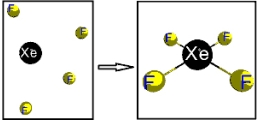
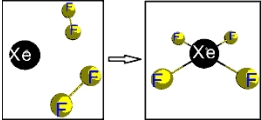
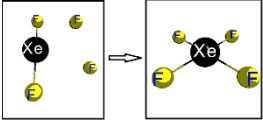
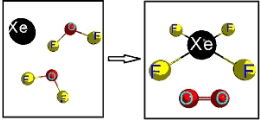
Which represents the formation reaction for XeF4(g) ? Each sphere represents 1 mol of atoms.


A) Which represents the formation reaction for XeF<sub>4</sub>(g) ? Each sphere represents 1 mol of atoms. A)    B)    C)    D)
B) Which represents the formation reaction for XeF<sub>4</sub>(g) ? Each sphere represents 1 mol of atoms. A)    B)    C)    D)
C) Which represents the formation reaction for XeF<sub>4</sub>(g) ? Each sphere represents 1 mol of atoms. A)    B)    C)    D)
D) Which represents the formation reaction for XeF<sub>4</sub>(g) ? Each sphere represents 1 mol of atoms. A)    B)    C)    D)

E) C) and D)
F) B) and C)

Correct Answer

verifed

verified

Showing 61 - 80 of 134

Related Exams

Show Answer